
A classic Middle Eastern salad of finely chopped tomatoes, cucumbers, and fresh herbs served over a bed of creamy whipped tahini.
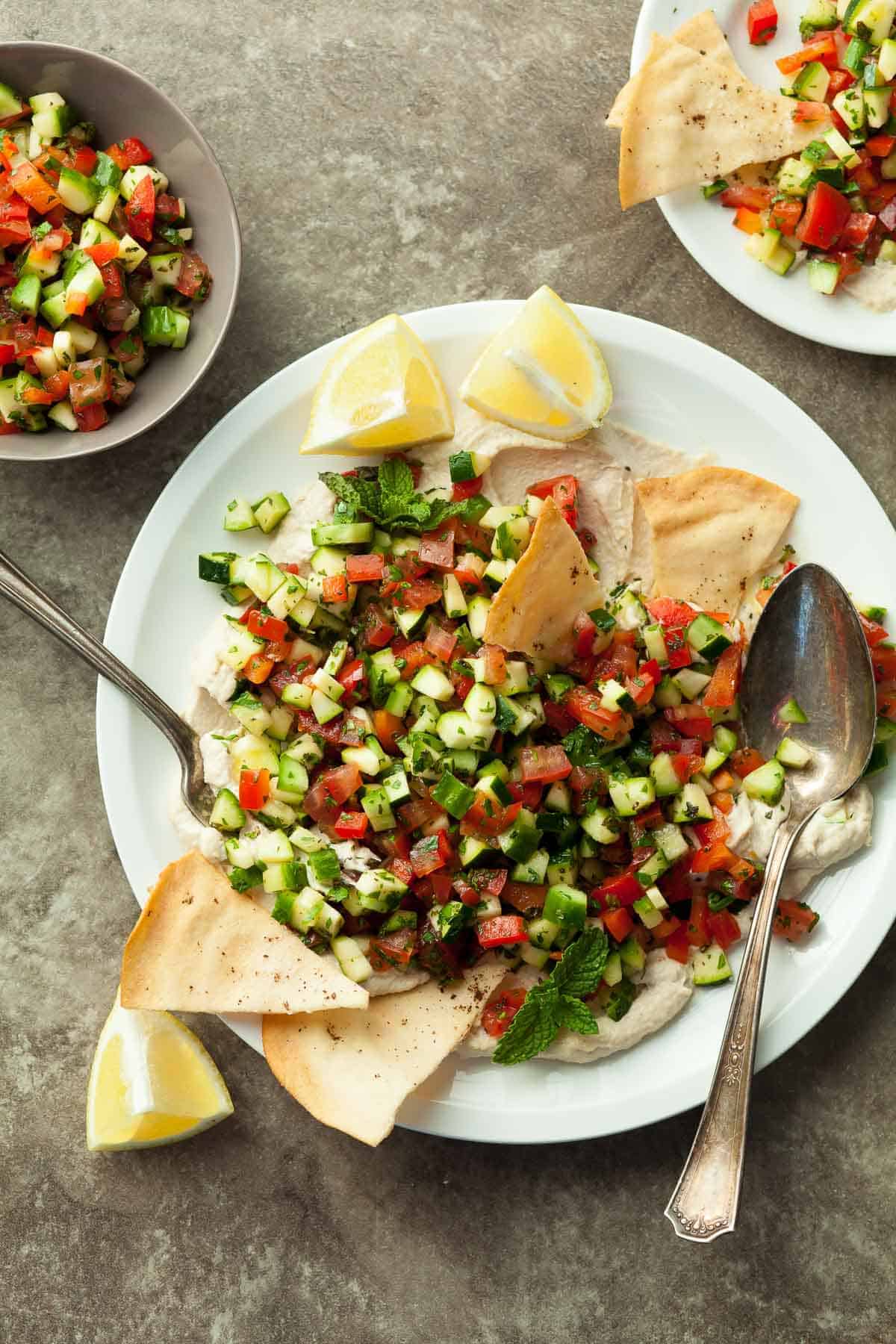
Middle Eastern Salad with Whipped Tahini
A good Middle Eastern salad is something I never get tired of making, and there's a reason it shows up on tables across an entire region. Few combinations of vegetables and herbs come together quite as well.
This version is served over a bed of whipped tahini, which adds a creamy, nutty layer that complements the fresh herbs and vegetables. Scoop it up with pita chips or eat it straight from the bowl.
Red bell pepper and zucchini are included here for extra crunch and color. Feel free to leave either out if you'd prefer to keep the salad more traditional.
(Scroll down for tips on getting the chop right and a few easy ways to vary the salad.)
What Is a Middle Eastern Salad?
A Middle Eastern salad, sometimes called Arabic salad or a chopped tomato and cucumber salad, is a staple across the Middle East and Mediterranean. Most versions include fresh tomatoes, cucumbers, fresh herbs, and a simple lemon and olive oil dressing. You'll find variations of this salad across the region each with its own twist.
The secret to a great Middle Eastern salad is the chop. Finely diced vegetables meld together so that each bite delivers a mix of flavors and textures rather than a mouthful of any one ingredient.
Why You'll Love This Middle Eastern Salad
- Works as an appetizer, side, or light meal. Serve it with pita chips for scooping or alongside grilled vegetables or proteins.
- The whipped tahini base. Creamy, nutty, and the perfect contrast to the fresh herbs and vegetables.
- No cooking required. Just chopping, whisking, and assembling. No stove, no oven.
- Full of fresh flavor. Tomatoes, cucumbers, herbs, and a bright lemon dressing.
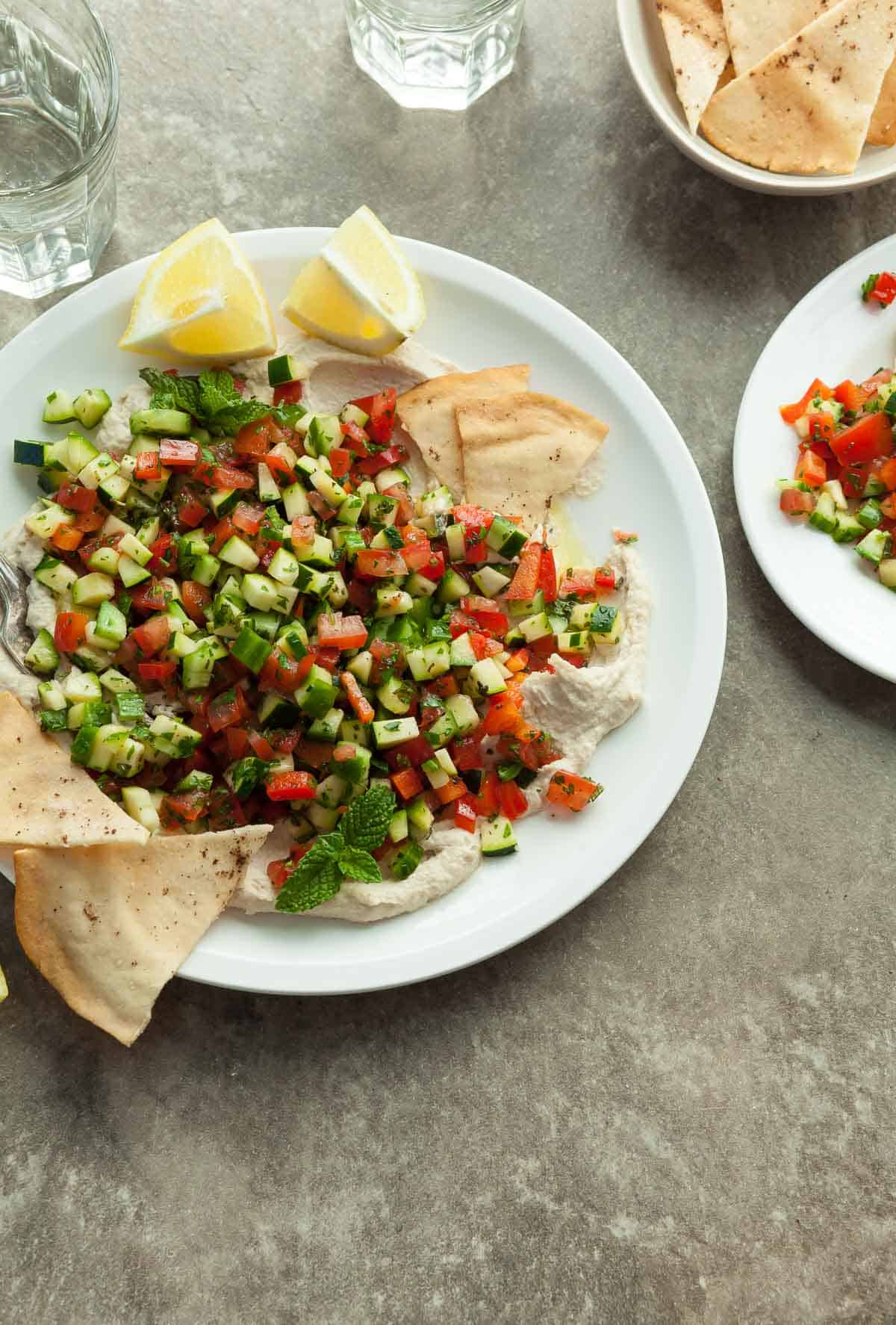
Ingredients for Middle Eastern Salad
For the salad:
- Tomatoes — Use vine-ripened tomatoes for the best flavor. Seed them before dicing to keep the salad from getting watery. A fine, uniform dice is the goal so choose firm tomatoes that will hold their shape under the knife.
- Persian cucumbers — Thin-skinned, mild, and nearly seedless. They hold their texture well once diced and don't add excess moisture to the salad. Seed them before dicing for the cleanest result.
- Red bell pepper — Adds sweetness, crunch, and color. Any color bell pepper works. Leave it out if you'd prefer to keep the salad more traditional.
- Zucchini — A less common addition that adds extra crunch and mild flavor. Seed it before dicing and use a small to medium zucchini for the best texture. Substitute more cucumber if you'd prefer to keep it classic.
- Scallion — Milder than red onion and a good fit for a finely chopped salad where you don't want any one ingredient to overpower. Red onion works as a substitute for a sharper bite.
- Fresh flat leaf parsley — Finely chopped. An essential herb in Middle Eastern salads, adding a clean fresh flavor.
- Fresh mint — Pairs beautifully with the lemon dressing and adds a cooling note.
- Sumac — A tangy, citrusy spice used to finish the salad. Find it at Middle Eastern grocery stores or in the spice aisle of well-stocked supermarkets.
For the lemon dressing:
- Fresh lemon juice — The backbone of the dressing. Use fresh, not bottled.
- Extra-virgin olive oil — Use a good one. The dressing is simple so the oil flavor comes through.
- Fine sea salt — To taste.
For the whipped tahini:
- Tahini — Use a good quality, runny tahini for the smoothest result. Stir well before measuring as tahini separates in the jar.
- Fresh lemon juice — Brightens the tahini and balances its richness.
- Garlic — Just a small clove. It adds depth without overpowering.
- Ground coriander — A small amount adds warmth and a subtle spice that pairs well with the other flavors.
- Fine sea salt — To taste.
- Filtered water — Added gradually to thin the tahini to a smooth, spreadable consistency.
How to Make Middle Eastern Salad
Step 1: Make the whipped tahini
Place the tahini, lemon juice, garlic, salt, coriander, and water into the bowl of a small food processor. Process until smooth, whipped, and creamy, adding more water a tablespoon at a time until you reach a thick but spreadable consistency.
Step 2: Chop the vegetables
Finely dice the tomatoes, cucumbers, bell pepper, zucchini, and scallion. The goal is a uniform, fine chop where each piece is roughly the same small size. This is the most important step. A fine chop means every forkful has a little of everything, it's what makes this salad standout.
Step 3: Toss with herbs and dressing
Place the chopped vegetables in a large bowl. Add the finely chopped parsley and mint and toss to combine. In a small bowl whisk together the lemon juice, olive oil, and salt. Drizzle over the salad and toss gently to coat.
Step 4: Assemble and serve
Spread the whipped tahini across a large serving plate or shallow bowl. Spoon the dressed salad on top. Finish with a pinch of sumac and serve immediately with pita chips or tortilla chips for scooping if desired.
Tips for the Best Middle Eastern Salad
- Use a sharp knife. The fineness of the chop depends on a sharp blade.
- Seed the tomatoes and cucumbers. Removing the seeds before dicing prevents the salad from becoming watery as it sits. For tomatoes, cut in half and squeeze gently before dicing. For Persian cucumbers, slice in half lengthwise and scrape out the seeds with a small spoon.
- Chop everything to the same size. Aim for pieces no larger than a quarter inch.
- Dress just before serving. Once dressed, the salad releases moisture fairly quickly. For the best texture and flavor, dress and assemble right before you're ready to eat.
- Make the whipped tahini ahead. It keeps in the fridge for up to 3-4 days and makes assembly very quick when you're ready to serve.
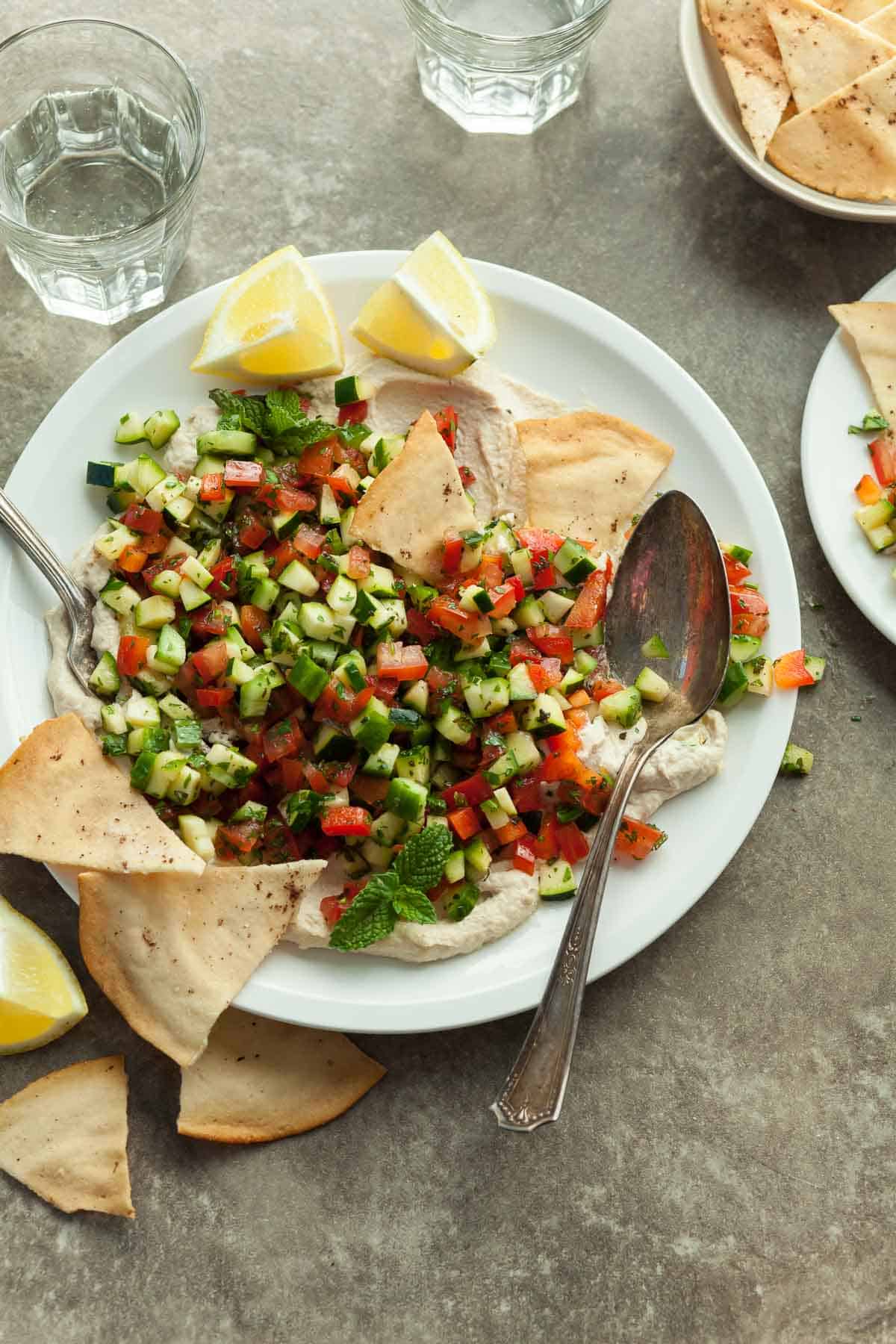
Variations
- Skip the tahini base. The salad works beautifully on its own as a classic Middle Eastern tomato cucumber salad without the whipped tahini underneath. Simply dress and serve.
- Add sumac to the dressing. Stir a teaspoon of sumac directly into the lemon dressing for a more intensely citrusy flavor throughout the salad.
- Add chickpeas. Chickpeas tossed into the salad adds protein and makes it a more substantial meal.
- Swap the herbs. Dill or cilantro work well in place of or alongside the parsley.
How to Serve a Middle Eastern Salad
As an appetizer: Spread the whipped tahini on a platter, spoon the salad on top, and serve with pita chips or tortilla chips for scooping.
As a side dish: This Middle Eastern cucumber salad pairs well with grilled vegetables, falafel, or any dish with warm spices and bold flavors.
As a light meal: Add chickpeas and serve with warm pita bread for a complete lunch.
With pita chips: Try these grain-free pita chips for a homemade option that pairs with the whipped tahini or use your favorite store-bought pita.
How to Store Middle Eastern Chopped Salad
Dressed salad: Best eaten the day it's made. The vegetables release moisture over time and the salad softens.
Undressed salad: The chopped vegetables (without dressing) keep in an airtight container in the fridge for up to a day. Store the dressing separately and toss just before serving. For best results, add the tomatoes just before serving as they release the most moisture.
Whipped tahini: Store in a sealed jar in the fridge for up to 4 days. It will thicken slightly as it sits, stir in a little water to loosen before serving.
FAQ
What is the difference between a Middle Eastern salad and tabbouleh?
Tabbouleh is made with bulgur wheat as the primary ingredient alongside a large amount of parsley. A Middle Eastern salad or Middle Eastern tomato cucumber salad uses no grain and is primarily vegetables, making it naturally gluten-free and lighter in texture.
What can I use instead of tahini?
If you don't have tahini, hummus makes a good substitute for this salad. It provides a similar creamy base.
Can I serve this salad without the whipped tahini?
Yes. The chopped salad is delicious on its own as a classic Middle Eastern tomato cucumber salad. Simply dress and serve. The tahini base adds richness but the salad stands alone without it.
What does sumac taste like?
Sumac has a tangy, citrusy flavor. It adds a depth to salads and dressings. If you can't find it, you can leave it out and the salad will still taste great.
Final Thoughts
Loaded with fresh produce and herbs, this Middle Eastern salad works as an appetizer, a side, or a salad, and is especially good on a hot summer day. I hope you enjoy it as much as I do.
More Salad Recipes
Middle Eastern Salad
This refreshing chopped tomato cucumber salad features fresh vegetables and herbs with a light lemon dressing served on a bed of whipped tahini for a fresh summer meal filled with crunch and color.
Ingredients
For the Salad:
- 3 small vine ripened tomatoes, seeded and finely diced
- 2 small Persian cucumbers, seeded and finely diced
- 1 medium red bell pepper, seeded and finely diced
- 1 medium zucchini, seeded and finely diced
- 1 scallion, trimmed and thinly sliced
- ½ cup fresh flat leaf parsley leaves, finely chopped
- ¼ cup fresh mint leaves, finely chopped
- Pinch of sumac to top
- Pita chips to serve (optional).
For the Dressing:
- 1 Tablespoon/15ml fresh lemon juice (plus more for whipped tahini)
- 2 Tablespoons/30ml extra-virgin olive oil
- ½ teaspoon fine sea salt
For the Whipped Tahini:
- ½ cup/120ml tahini
- 2 Tablespoons/30ml fresh lemon juice
- 1 small garlic clove
- ¼ teaspoon fine sea salt
- ⅛th teaspoon ground coriander
- ¼ cup/60ml filtered water
Instructions
Make the Salad:
- Place chopped tomatoes, cucumbers, red pepper and zucchini in a large bowl and gently toss with chopped herbs.
Make the Dressing:
- In a small bowl whisk together lemon juice, oil and salt. Drizzle over chopped salad and gently toss to combine.
Make the Whipped Tahini:
- Place the tahini, lemon juice, garlic, salt, coriander and water into the bowl of a small food processor and process until smooth, whipped and creamy adding more water if necessary.
- To serve, spread whipped tahini on serving plate and spoon the salad on top. Sprinkle with a pinch of sumac and serve with pita chips if desired.
Notes
Dietary Info:
Gluten-Free, Grain-Free, Vegetarian, Vegan, Dairy-Free, Egg-Free, Paleo
Related Recipe:
Recommended Products
As an Amazon Associate and member of other affiliate programs, I earn from qualifying purchases.

Nutrition Information:
Yield:
4Serving Size:
1Amount Per Serving: Calories: 261Total Fat: 21gSaturated Fat: 3gTrans Fat: 0gUnsaturated Fat: 17gCholesterol: 0mgSodium: 326mgCarbohydrates: 16gFiber: 3gSugar: 4gProtein: 6g
Nutritional information for recipes contained on this website, such as calories, fat, carbs, etc. are only estimates and are not guaranteed to be accurate.

Sylvie Shirazi is the recipe developer and food photographer behind Gourmande in the Kitchen. For the last 10 years she's been making eating more healthfully easy and accessible with gluten-free, grain-free, paleo and vegan recipes that are free from processed ingredients.
Leave a Reply