
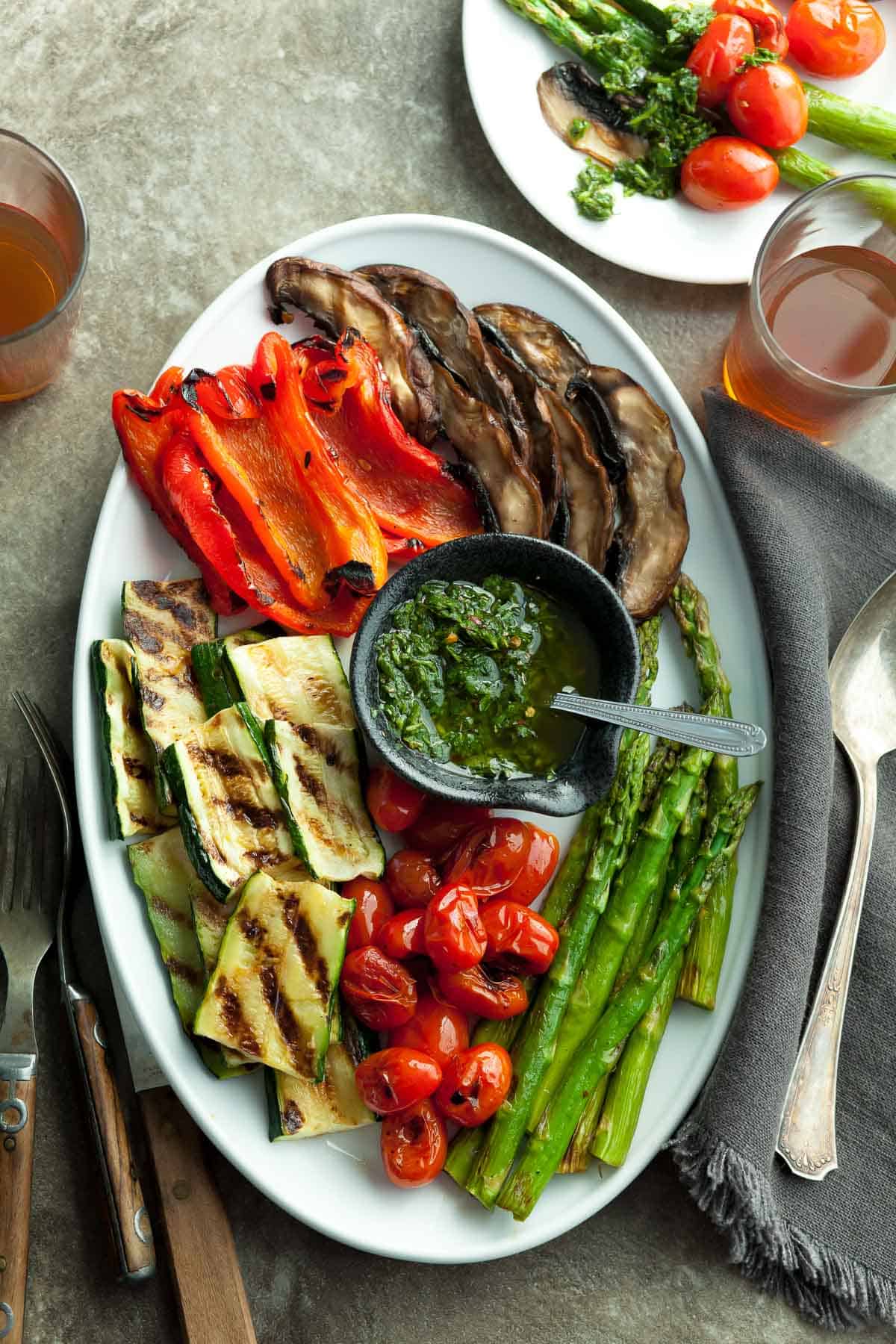
A bright, herby basil chimichurri sauce with fresh parsley, lemon, and a touch of heat. Ready in minutes and good on just about everything.
Basil Chimichurri Sauce
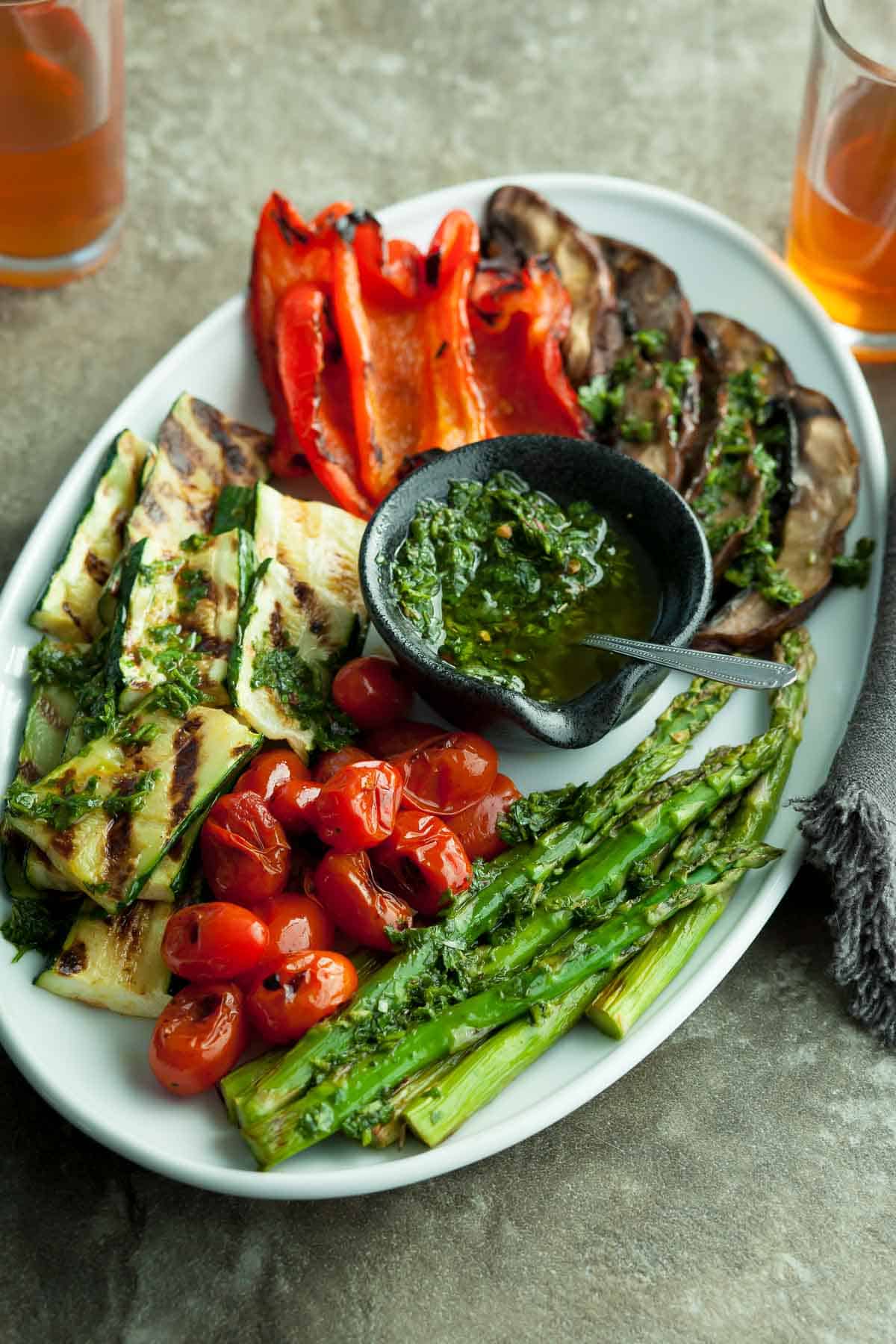
Basil chimichurri gives the classic Argentinian herb sauce a Mediterranean twist. My favorite way to serve it is drizzled over a platter of grilled summer vegetables, but once you have a batch made you'll find it pairs with far more than that, from roasted potatoes and grain bowls to a simple dipping sauce for bread.
Summer is the best time to make this sauce, when basil is abundant and the grill is already on.
(Scroll down for tips on making the best basil chimichurri sauce and a full guide to serving it over grilled summer vegetables.)
What Is Basil Chimichurri?
Chimichurri is a bold, herb-packed sauce from Argentina, traditionally made with parsley, garlic, red wine vinegar, olive oil, and red pepper flakes. It sits somewhere between a pesto and a vinaigrette in texture, and it has a bright, acidic punch that pairs well with anything cooked over high heat, from grilled vegetables to steak.
Basil chimichurri swaps some or all of the parsley for fresh basil, which gives the sauce a different character than the classic version. This recipe uses both herbs together, which gives you the brightness of parsley alongside the depth of basil. The addition of lemon juice and dried oregano leans it in a more Mediterranean direction, making it a natural fit for grilled vegetables and anything else off the grill.
Why You'll Love This Basil Chimichurri Sauce
- Only a handful of ingredients. Fresh herbs, good olive oil, a little acid, and pantry staples. Nothing complicated.
- Ready in minutes. A food processor or sharp knife is all you need. The sauce comes together almost instantly.
- Make-ahead friendly. The flavor improves after a few hours in the fridge as the herbs and garlic meld together. (Note that the basil will darken over time, which affects the color but not the flavor.)
- Versatile. Grilled vegetables, roasted potatoes, grain bowls, bread. This is the kind of sauce that works with almost anything.
Ingredients for Basil Chimichurri Sauce
- Fresh basil — Use a generous amount of fresh leaves, stems removed. It's what distinguishes this from a classic chimichurri and gives the sauce its distinctive flavor.
- Fresh parsley — Flat leaf parsley, stems removed. It adds a clean, fresh flavor that balances the basil and keeps the sauce tasting bright.
- Garlic — Enough to add depth without overpowering the herbs.
- Red wine vinegar — The classic acid for chimichurri. It provides a sharp, fruity tang that anchors the sauce.
- Fresh lemon juice — Adds brightness alongside the vinegar. Use fresh, not bottled.
- Dried oregano — Just a pinch. Adds to the Mediterranean flavor of the sauce.
- Red pepper flakes — For a gentle heat. Adjust to your preference.
- Extra-virgin olive oil — Use the best you have. It carries the flavor of the herbs.
- Fine sea salt and black pepper — To taste.
How to Make Basil Chimichurri Sauce
Step 1: Chop the herbs
Finely chop the parsley and basil in a small food processor, or with a sharp knife for a chunkier, more rustic texture. Hand chopping gives you more control over the final texture. If using a food processor, pulse rather than blend to avoid turning the herbs into a paste.
Step 2: Combine
Add the garlic, red wine vinegar, lemon juice, oregano, red pepper flakes, salt, and pepper. Pulse or stir to combine.
Step 3: Add the oil and serve
Slowly pour or whisk in the olive oil until everything is combined. Taste and adjust the seasoning, adding more salt, lemon juice, or red pepper as needed. Use immediately or cover and refrigerate until needed.
Tips for the Best Basil Chimichurri
- Serve at room temperature. Cold chimichurri straight from the fridge will be thick and the olive oil may solidify slightly. Let it come to room temperature and give it a good stir before using.
- Use fresh herbs. Dried basil or parsley won't work here. The sauce depends entirely on the bright, fresh flavor of the herbs.
- Don't over-process. If using a food processor, pulse rather than blend. You want a finely chopped sauce with some texture, not a smooth paste.
- Taste before serving. Always taste and adjust the acid, salt, or heat to your preference before serving.
Ways to Use Basil Chimichurri Sauce
Over grilled vegetables: See the full guide below for how to make a complete grilled vegetable platter with basil chimichurri.
As a dipping sauce: Set out a bowl alongside crusty bread, crudités, or roasted potatoes.
As a salad dressing: Thin with a little extra olive oil and lemon juice and use as a dressing for grain bowls, arugula salads, or anything with chickpeas or roasted vegetables.
On roasted potatoes: Toss warm roasted potatoes in the sauce while they're still hot.
How to Store Basil Chimichurri Sauce
Refrigerator: Store in a sealed jar for up to 3 days. The basil will darken slightly over time but the flavor stays bright. Give it a good stir and bring to room temperature before serving.
Serving Suggestion: Chimichurri Vegetables
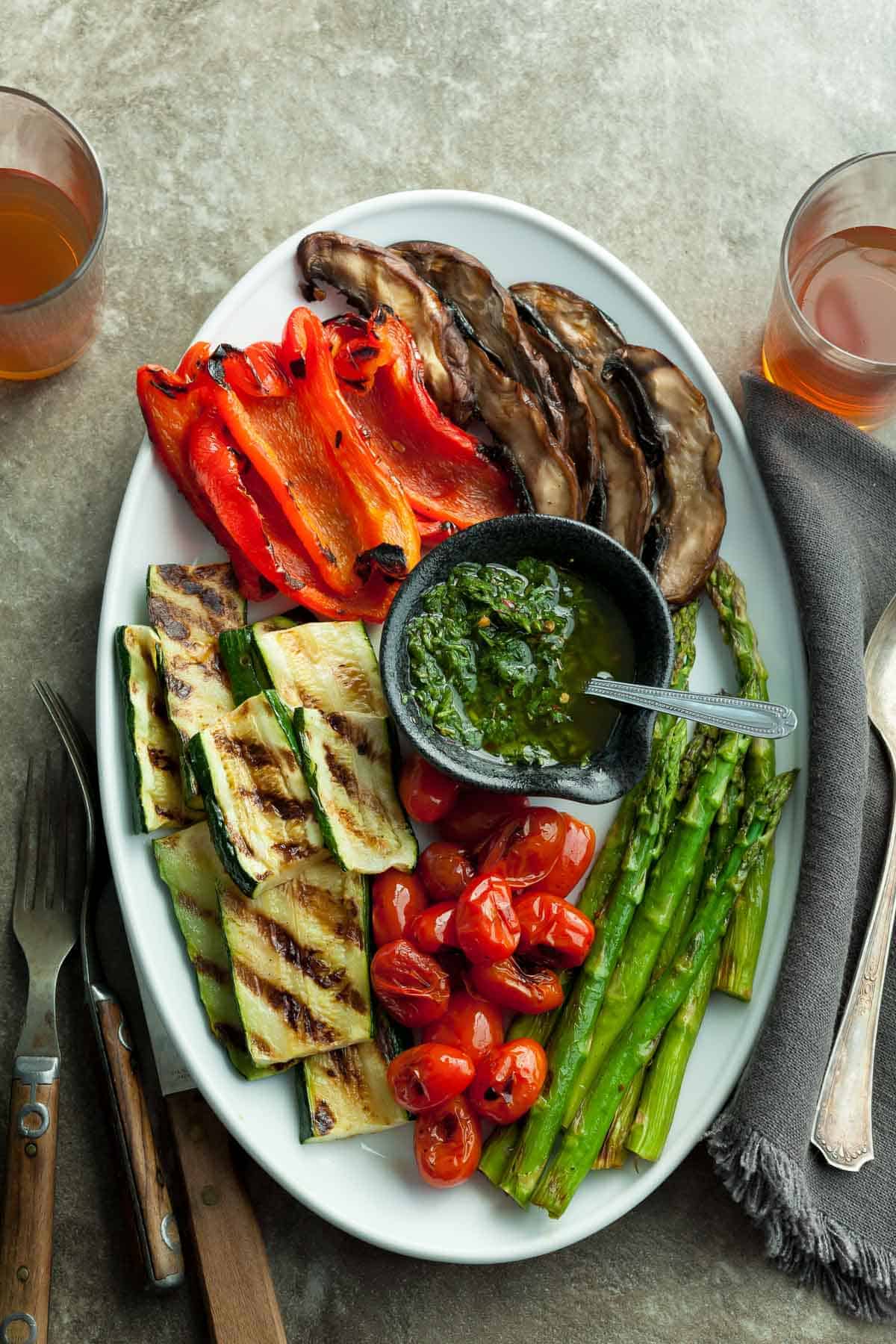
The most natural home for basil chimichurri is a platter of grilled summer vegetables. The smokiness of the char and the brightness of the sauce work particularly well together. Here's how to do it.
What You'll Need
- red bell peppers, cored, seeded, and quartered
- medium zucchini, halved and cut into thick slices
- asparagus spears
- cherry or grape tomatoes
- Portobello mushrooms, sliced into 1-inch pieces
- Extra-virgin olive oil for brushing
- Fine sea salt
How to Make the Grilled Vegetables
Step 1: Prep. Lay all the vegetables on a sheet pan. Brush generously on all sides with olive oil and sprinkle with salt. Let sit while the grill heats up.
Step 2: Grill. Preheat the grill to medium-high and oil the grates. Working in batches, grill the vegetables until tender and lightly charred, turning once with tongs. Grill the cherry tomatoes in a cast iron skillet or grill basket set directly on the grill.
Step 3: Dress and serve. Arrange the grilled vegetables on a large platter while still warm. Spoon the basil chimichurri generously over the top and let the vegetables sit for a few minutes to absorb the sauce. Serve at room temperature with extra chimichurri on the side.
Approximate Grill Times
- Cherry tomatoes: 5 to 8 minutes in a skillet or grill basket
- Asparagus: 4 to 6 minutes, turning once
- Zucchini: 4 to 6 minutes per side
- Red peppers: 6 to 8 minutes per side
- Portobello mushrooms: 4 to 5 minutes per side
Tips for the Grilled Vegetables
- Don't crowd the grill. Work in batches so the vegetables char rather than steam.
- Dress while warm. Spooning the chimichurri over the vegetables while they're still hot from the grill helps the sauce absorb rather than sit on top.
- No outdoor grill? A cast iron grill pan on medium-high heat works beautifully indoors and gives you the same char and grill marks.
Variations
- Add heat. Stir in finely minced fresh red pepper instead of the red pepper flakes for a spicier version.
- Make it chunkier. Skip the food processor entirely and chop everything by hand for a more rustic, textured sauce.
FAQ
What is the difference between basil chimichurri and pesto?
They look similar but taste quite different. Pesto is made with basil, pine nuts, and Parmesan, giving it a rich, creamy, nutty flavor. Basil chimichurri has no cheese or nuts, uses vinegar and lemon juice for acidity, and has more herb flavor. Chimichurri is tangy and a little spicy where pesto is rich and savory.
What vegetables work best with basil chimichurri?
Almost any vegetable that can handle high heat works well. Zucchini, bell peppers, asparagus, mushrooms, eggplant, and cherry tomatoes are all particularly good choices since their natural flavors balance the acidity of the sauce beautifully.
Can I use white wine vinegar instead of red wine vinegar?
Yes. White wine vinegar is slightly milder and less fruity than red wine vinegar but works well here. Apple cider vinegar is another option if that's what you have on hand.
Does basil chimichurri work as a salad dressing?
It does. Thin it slightly with a little extra olive oil and lemon juice and it works well over arugula, grain bowls, or any salad with chickpeas or roasted vegetables.
Final Thoughts
Summer basil and a hot grill are two of the best things about this time of year. This sauce is really just a way of making the most of both at once. Make a batch and I think you'll find yourself coming back to it all season.
More Sauces
Basil Chimichurri
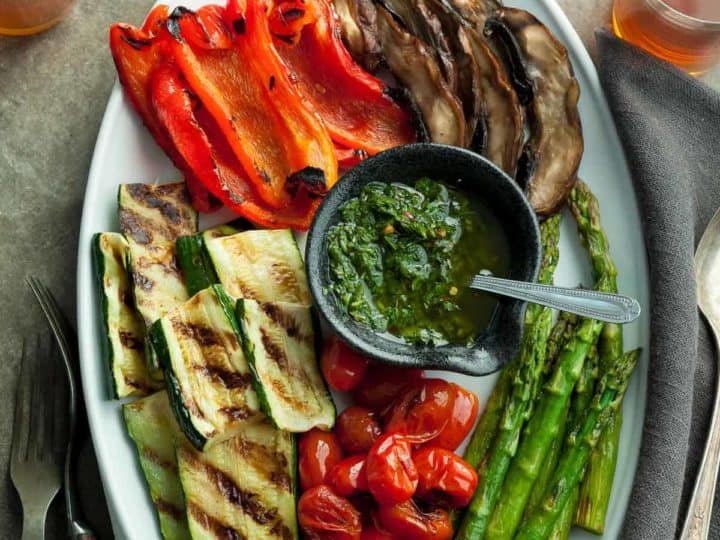
Learn how to make basil chimichurri sauce and try it on your favorite grilled veggies!
Ingredients
For the Basil Chimichurri:
- ½ bunch fresh parsley leaves
- 1 oz/28g fresh basil leaves
- 1 small garlic clove, finely grated
- ½ Tablespoon/7g red wine vinegar
- ½ Tablespoon/7g fresh lemon juice
- ¼ teaspoon crushed red pepper flakes
- ¼ teaspoon dried oregano
- ¼ teaspoon fine sea salt
- Freshly ground black pepper to taste
- 2 Tablespoons/30ml extra-virgin olive oil
For the Grilled Vegetables:
- 2 red peppers, cored, seeded and quartered
- 2-3 medium zucchini, halved and cut into thick slices
- ½ a bunch of asparagus spears
- 8oz/227g Cherry or grape tomatoes
- 2 Portobello mushrooms, sliced into 1-inch slices
- Extra-virgin olive oil to brush
- 1 teaspoon fine sea salt
Instructions
Make the Basil Chimichurri Sauce:
- Finely chop parsley and basil in a small food processor or with a sharp knife.
- In a small bowl combine all remaining ingredients except for oil.
- Slowly whisk in oil and set aside until needed or cover and refrigerate overnight.
Make the Grilled Vegetables:
- Pre-heat greased grill over medium heat.
- Place vegetables on a sheet pan and brush generously on all sides with extra virgin olive oil. Sprinkle with salt and let sit 5 minutes.
- Working in batches, grill the vegetables until tender and lightly charred, about 5-8 minutes, turning once with tongs (red peppers will take a few minutes longer).
- Arrange grilled vegetables on platter and drizzle with chimichurri sauce. Serve warm or at room temperature with remaining sauce on the side.
Notes
Dietary Info:
Gluten-Free, Grain-Free, Vegetarian, Vegan, Dairy-Free, Egg-Free, Nut-Free, Paleo
Recommended Products
As an Amazon Associate and member of other affiliate programs, I earn from qualifying purchases.

Nutrition Information:
Yield:
6Serving Size:
1Amount Per Serving: Calories: 160Total Fat: 12gSaturated Fat: 2gTrans Fat: 0gUnsaturated Fat: 10gCholesterol: 0mgSodium: 448mgCarbohydrates: 13gFiber: 3gSugar: 9gProtein: 3g
Nutritional information for recipes contained on this website, such as calories, fat, carbs, etc. are only estimates and are not guaranteed to be accurate.

Sylvie Shirazi is the recipe developer and food photographer behind Gourmande in the Kitchen. For the last 10 years she's been making eating more healthfully easy and accessible with gluten-free, grain-free, paleo and vegan recipes that are free from processed ingredients.
Leave a Reply