
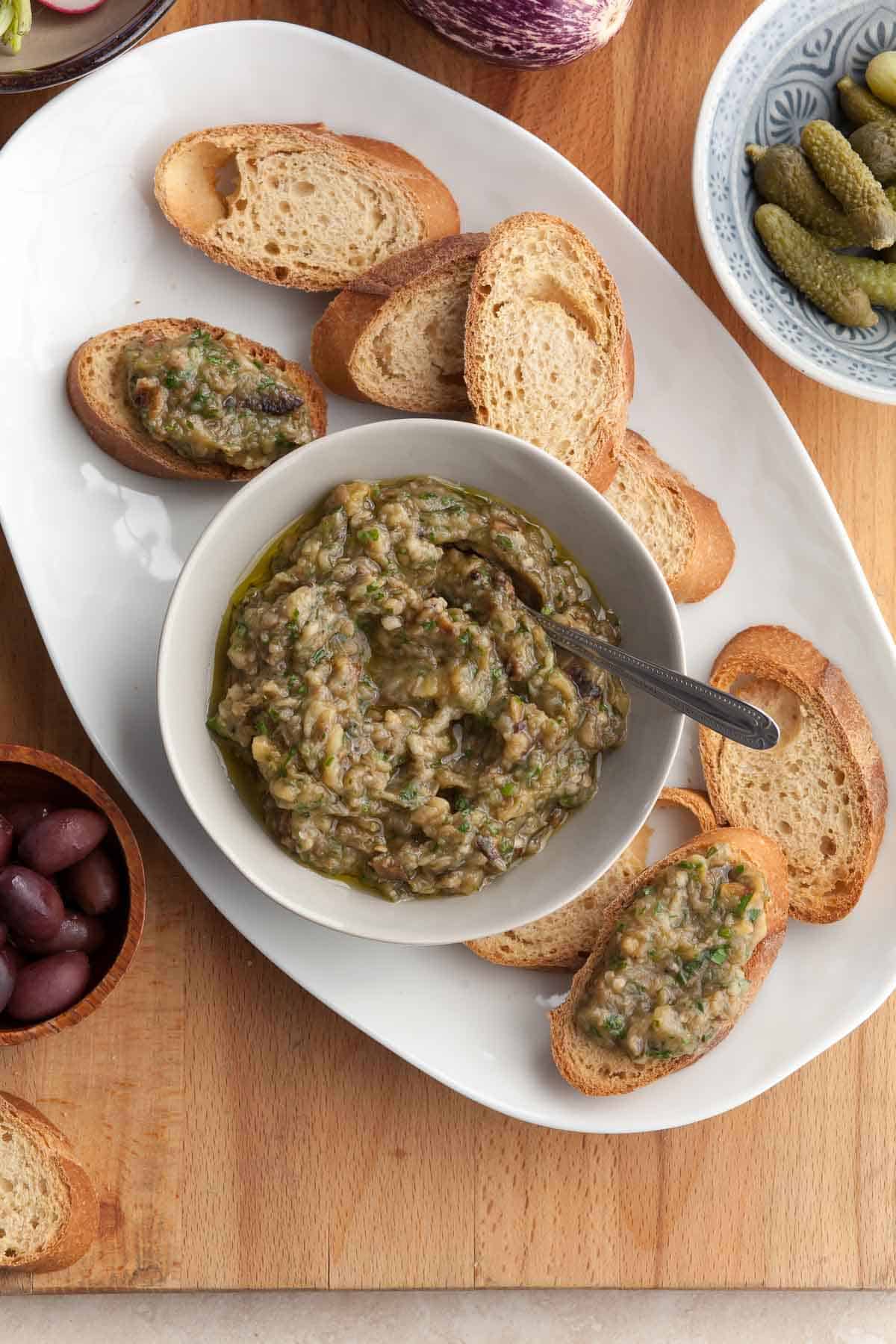
Roasted eggplant dip made with garlic, lemon, olive oil and fresh herbs. A simple French eggplant spread that's good on toast or served as a dip.
Eggplant Caviar (French Eggplant Spread)
This French eggplant spread is a classic of Provençal cooking, where the best recipes are often the simplest ones. Serve it as a dip, spread it on toast, or set it out for apéro, (the French tradition of pre-dinner drinks and small bites) alongside olives, crudités, and a glass of wine.
This version is inspired by the Provençal tradition and includes black olives, which are a popular regional addition. They're optional but add a briny depth that works well with the mellow flavor of the roasted eggplant.
What Is Eggplant Caviar?
Eggplant caviar is an eggplant spread found across many culinary traditions, from Eastern Europe to the Middle East and the Mediterranean. This version is in the French tradition, specifically the cooking of Provence, where good olive oil, garlic, and fresh herbs reign.
Not to be confused with baba ganoush, which is a Middle Eastern version that includes tahini and charred eggplant for a smokier flavor; this eggplant caviar is lighter and brighter, made simply with olive oil, lemon, and garlic.
The black olives are a classic Provençal addition, and a version made with tomatoes is also common in the region.
Why You'll Love This French Eggplant Caviar
- Simple summer cooking. Just a handful of simple ingredients are all you need.
- Full of flavor. Roasting the eggplant at high heat concentrates the flavor and gives the spread a silky, melt-in-your-mouth texture.
- Perfect for entertaining. It's best made ahead, travels well, and keeps in the fridge for several days. Ideal for apéro, a mezze spread, or a summer gathering.
- Versatile. Serve it as an eggplant dip, a spread for toast, or alongside grilled vegetables.
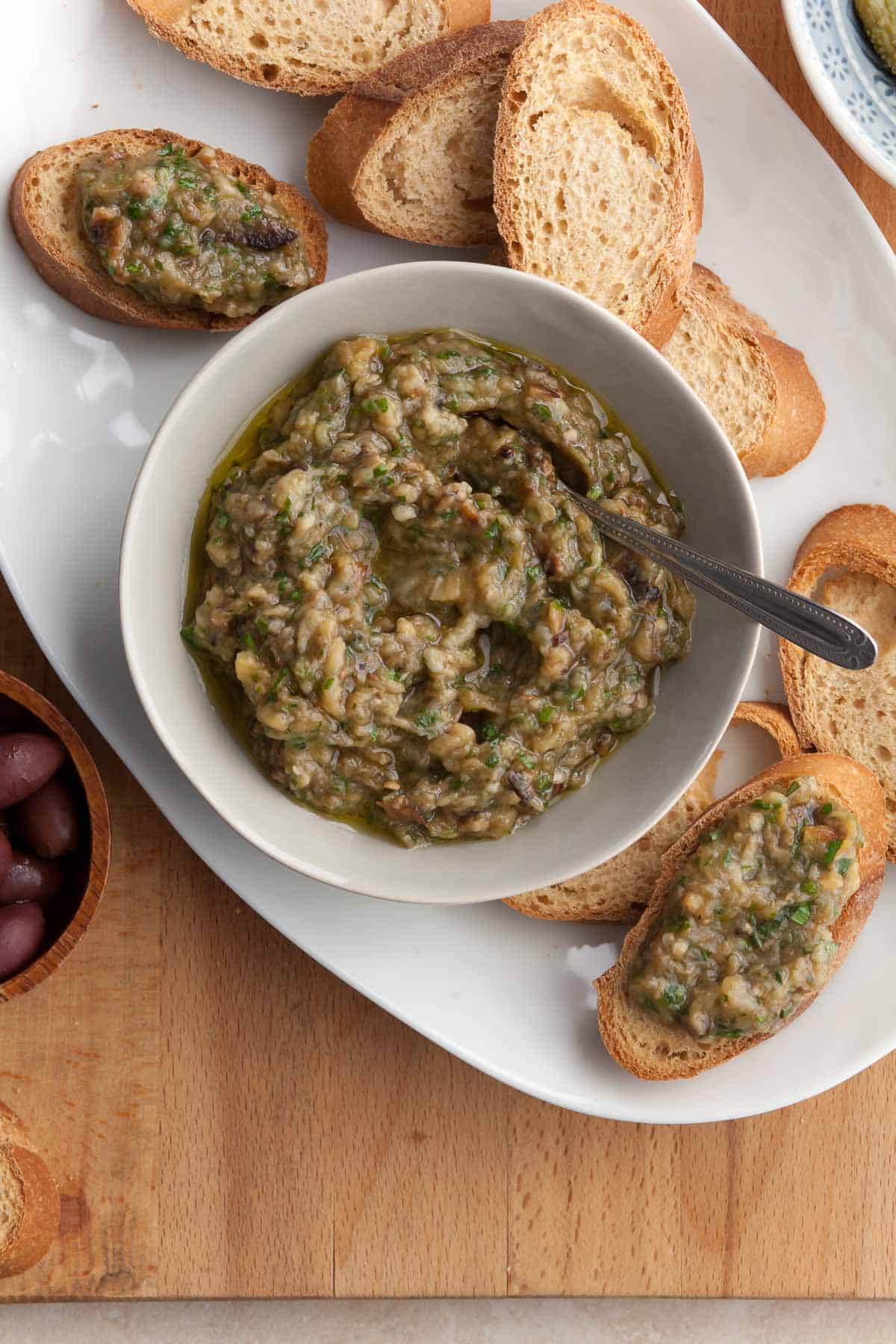
Ingredients for Eggplant Caviar
- Eggplant. Look for small to medium eggplants with shiny skin. These tend to have fewer seeds and a less bitter flavor than bigger ones.
- Extra virgin olive oil. Used both to roast the eggplant and to finish the spread. Garlic. Finely grated for that essential Provençal flavor.
- Fresh lemon juice. A squeeze of lemon brightens everything.
- Black olives (optional). Finely chopped and mixed in with the eggplant. Choose ones packed in brine rather than canned in water. A good shortcut is to use a spoonful of olive tapenade instead of chopping your own.
- Fresh herbs. A few leaves of thyme, basil, and/or parsley. The herbs add freshness that brightness the whole dip.
- Salt and freshly ground black pepper. To season.
How to Make Eggplant Caviar
Step 1: Roast the Eggplant
Preheat the oven to 450°F (230°C). Slice the eggplant in half lengthwise. Score the flesh in a crosshatch pattern, cutting about an inch deep without piercing the skin. Rub with olive oil and season with salt.
Place the eggplant halves flesh side down on a parchment-lined baking sheet. Roast for 40 minutes until the flesh is completely soft and silky.
Tip: Don't rush the roasting. The eggplant needs to be soft all the way through. Any firmness left in the flesh will give you a stringy, undercooked spread.
Step 2: Scoop
Let the eggplant cool until comfortable to handle. Scoop the flesh away from the skin with a large spoon and transfer to a cutting board. Discard the skin.
Step 3: Chop
Add the garlic, olives (if using), fresh herbs, and a pinch of salt to the eggplant on the cutting board. Chop everything together with a chef's knife until you reach a rough, textured consistency. The garlic, olives, and herbs will work their way through the eggplant as you chop, seasoning it evenly.
Prefer a smoother result? A few quick pulses in a small food processor will get you there. Don't over-process. Eggplant caviar should have some texture.
Step 4: Dress and Season
Transfer to a bowl. Stir in the olive oil and lemon juice. Taste and adjust: more lemon for brightness, more salt if needed. Finish with an additional drizzle of olive oil and top with fresh herbs before serving if desired.
Tips for the Best Eggplant Caviar
- Score the flesh deeply. The crosshatch scoring helps the olive oil penetrate and allows the flesh to cook more evenly. Cut about an inch deep.
- Chop by hand for the best texture. A food processor is faster, but hand-chopping gives you a more rustic result. Use a sharp chef's knife.
- Make it ahead. Eggplant caviar is better after a few hours in the fridge when the flavors have had time to come together. Make it the morning of, or even the day before, and it will be even better by the time you serve it.
Variations
- Swap the herbs. Thyme is the most Provençal choice; basil gives it a more Italian character; parsley keeps it clean and neutral. Any combination works.
- Add a little heat. A small pinch of red pepper flakes adds a gentle warmth without overpowering the eggplant.
- Grill instead of roast. If you have access to a grill, charring the eggplant directly over the flame gives the finished spread a smoky depth that's hard to replicate in the oven.
- Use tapenade. Instead of chopping black olives by hand, stir in a spoonful of good-quality olive tapenade for a quick shortcut.
How to Serve Eggplant Caviar
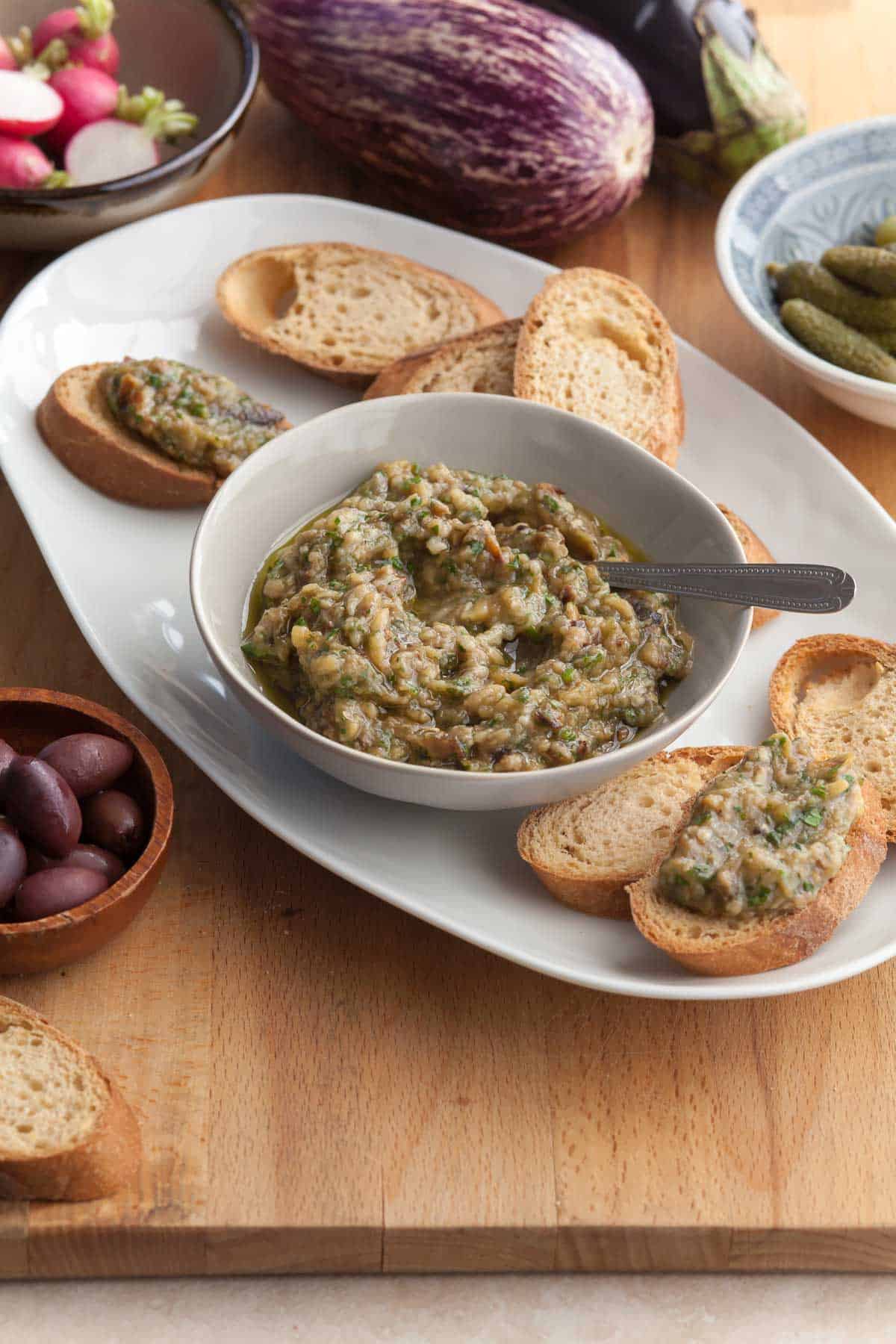
For an apéro spread: Set out in a bowl alongside olives, sliced radishes, cornichons, and toasted bread or crackers and serve with a cold glass of Provençal rosé.
As a spread for toast or sandwiches: Spoon generously onto thick slices of toasted bread or baguette.
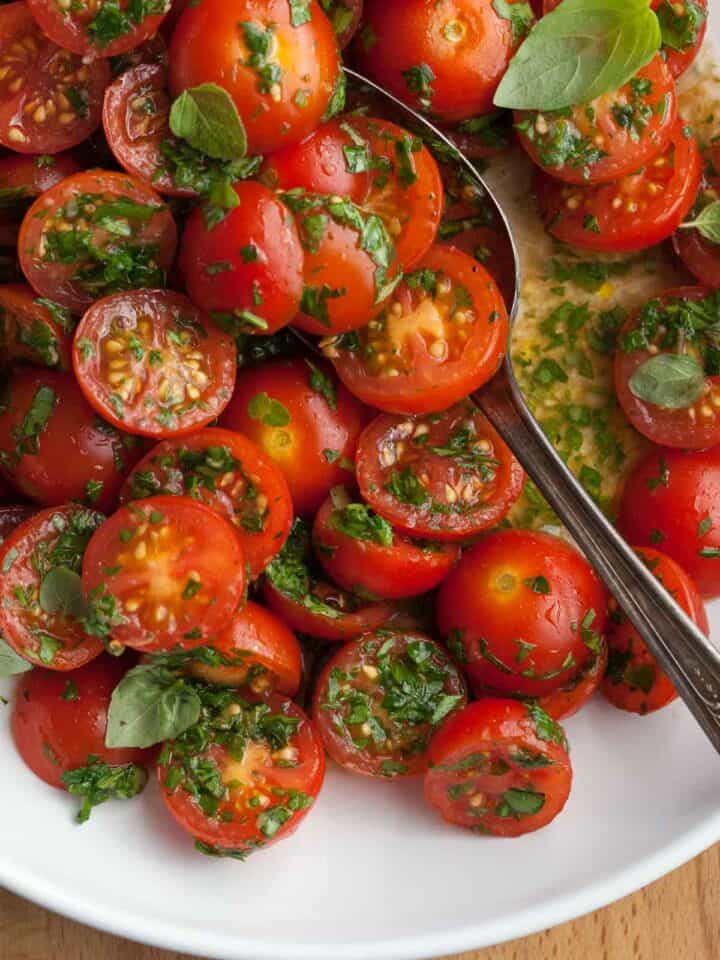
Love Provençal flavors? Try my Provencal Tomatoes or Provencal Tian.
How to Store Eggplant Caviar
Transfer to an airtight container and refrigerate for up to 4 days. The flavors deepen as it sits. Drizzle with olive oil over the top before serving to refresh it.
FAQ
How do I know when the eggplant is done roasting? The flesh will be completely soft when pierced with a knife. If there's any resistance give it more time. An under roasted eggplant will be spongy and bitter.
Why do you roast the eggplant flesh side down? Placing the eggplant cut side down traps the steam against the parchment, which helps it cook through more evenly and quickly.
Can I make this with a different variety of eggplant? Globe eggplant is the easiest choice for this recipe since it gives you the most flesh to work with. Japanese or Italian eggplants also work well but you’ll need more since they're smaller. Avoid very large or old eggplants which tend to be bitter and seedy.
Final Thoughts
This is the kind of spread that makes entertaining easy. Make it in the morning or the night before, pull it from the fridge before guests arrive, set it out with a few nibbles, pour a cold glass of wine, and let people help themselves.
More Dips, Spreads and Sauces
Eggplant Caviar
Eggplant caviar is a roasted eggplant spread from the south of France served as a dip or appetizer.
Ingredients
- 2-3 small globe eggplants, about 1½ pounds/680g total
- 3 Tablespoons/45ml extra virgin olive oil, plus more to finish
- ¼ teaspoon salt
- 1 garlic clove, finely grated
- 2 Tablespoons /22g black olives (Kalamata), finely chopped (optional)
- 2 Tablespoons fresh herbs (thyme leaves, torn basil, and/or flat-leaf parsley), roughly chopped
- 1 Tablespoon / 15ml fresh lemon juice, or to taste
To Serve
- Toasted bread, baguette, or crackers (gluten-free if needed)
- Olives, radishes, crudités
Instructions
Roast the eggplant:
Preheat oven to 450°F (230°C). Halve the eggplants lengthwise and score the flesh in a crosshatch pattern about 1 inch deep. Rub with 2 Tablespoons of the olive oil and season with half the salt. Place flesh side down on a parchment lined baking sheet. Roast for 30–40 minutes until the flesh is completely soft.
Scoop:
Let cool slightly. Scoop the flesh from the skin and transfer to a cutting board. Discard the skin.
Chop:
Add the garlic, olives (if using), fresh herbs, and the rest of the salt to the eggplant on the cutting board. Chop everything together with a chef's knife until you reach a rough, textured consistency. (For a smoother result, pulse a few times in a small food processor rather than chopping by hand. Don't over-process.)
Dress and season:
Transfer to a bowl. Stir in remaining olive oil and the lemon juice. Taste and adjust seasoning. Finish with an additional drizzle of olive oil and fresh herbs before serving if desired.
Notes
Texture: For a smoother result, pulse a few times in a small food processor rather than chopping by hand. Don't over-process.
Olives: Kalamatas work well. A good shortcut is to use a spoonful of olive tapenade instead of chopping olives by hand.
Make ahead: Store in an airtight container in the refrigerator for up to 4 days. Finish with a fresh drizzle of olive oil before serving.
Dietary Info:
Gluten-Free, Grain-Free, Vegetarian, Vegan, Dairy-Free, Egg-Free, Paleo
Nutrition Information:
Yield:
6Serving Size:
1Amount Per Serving: Calories: 68Total Fat: 7gSaturated Fat: 1gUnsaturated Fat: 6gSodium: 127mgCarbohydrates: 1gFiber: 0gSugar: 0gProtein: 0g
Nutritional information for recipes contained on this website, such as calories, fat, carbs, etc. are only estimates and are not guaranteed to be accurate.

Sylvie Shirazi is the recipe developer and food photographer behind Gourmande in the Kitchen. For the last 10 years she's been making eating more healthfully easy and accessible with gluten-free, grain-free, paleo and vegan recipes that are free from processed ingredients.
Leave a Reply